



I’ve never seen more head shakes in a professional kitchen than during a very specific kind of line cook boast. During a moderately busy dinner service, our sauté cook was down in the walk-in refreshing ingredients. A ticket came in for an order-fire steak frites, and a new hire hopped over from the fryer to execute it. This is good etiquette. Don’t let your teammates fail.
Everything for the pickup came together perfectly. A great sear, baste and rest on the steak. Fries ready in the window. Side salads arriving at just the right time. Gorgeous plating. A picturesque medium rare. And then the sauté chef hopped back on their station, orchestrating a seamless transition for this new cook back over to the fryer, where they bragged intermittently about the beauty of their successful celeb shot.
“I should’ve snapped a pic.”
Something about it felt off to me. Our sous chef muttered under his breath, “That’s not how we do things.”
Breaking down the kitchen after service, he went deeper. Here’s the gist: there’s nothing impressive about nailing a single dish once under perfect conditions. Anyone can do that. The best cooks can work under the worst conditions, with whatever ingredients they’ve got, under any time or labor constraints, and do it with remarkable consistency. More than anything, they can roll with the flood of bullshit that comes from the daily grind in a kitchen. Great cooks know how to adjust.
That stuck with me. I think about it every Thanksgiving. I love a lot of the food writing here on Substack, but when it comes to cooking advice and recipes, I find there are two dominant approaches to mistakes.
The first is an embrace of a no-fail method. Easy, approachable, you-can’t-screw-this-up guides — the third prong in the modern cookbook bestseller list alongside influencers and dieters.
The second is a call to take dinner less seriously. A prompt that even if everything goes horribly wrong, you can order Chinese or pizza. The stakes are never as high as you aggrandize in your head. I mostly agree with this.
But much like in unproductive corporate environments, there are not a lot of blunt retros of fuck-ups in food writing. And that’s often where cooks actually learn and improve. What mistakes did you make for the first time? What were your repeat mistakes? Why? Was there a way to implement a fix on the fly? Should you have conceded sooner? What do you need to try again until you get it right?
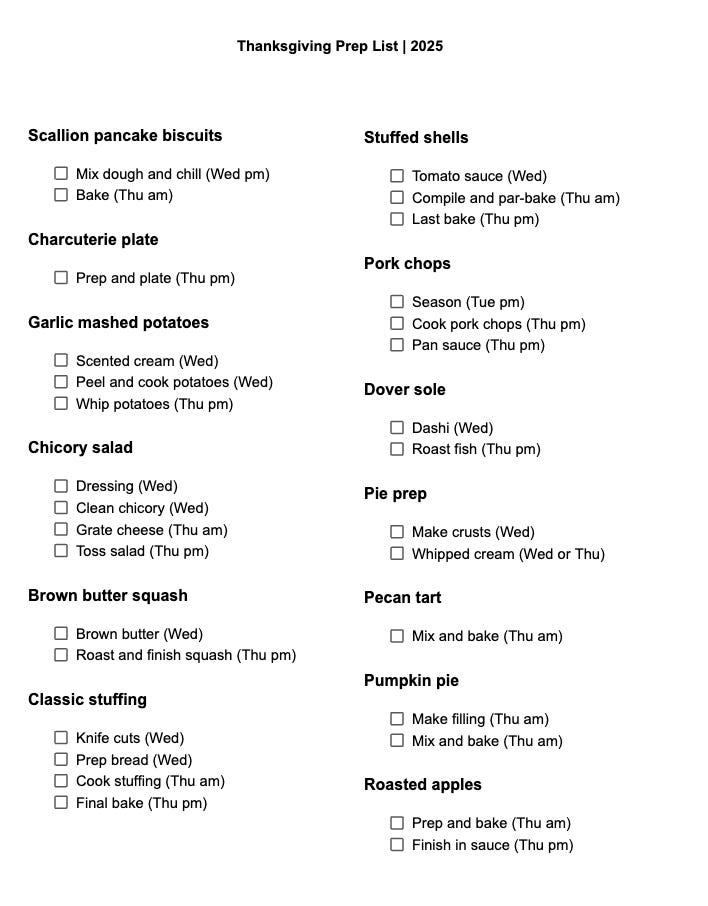
I like getting into this stuff, so I kept a log of all the new and repeated mistakes I made during my Thanksgiving cook of this prep list:
My mistakes
I always think I’m going to begin cooking sooner than I actually do. I planned to be organized and ready to attack my prep list by noon on Wednesday. Actual start time: 5pm. I still found myself with an empty block from 2:30-4pm on Thanksgiving to rest a bit, but that’s after waking up at 6am to bake. Factor in a few hours for external life factors, especially when family is in town.
I’m in a battle to the death with my HomePod speakers, trying to get them to sync across rooms. A new cooking and hosting playlist was all set, but then these bad boys just collapsed on me on Thursday. Only one room had music. Brutal. Sort out your tech issues early.
I’m at my most control-freaky on days like Thanksgiving, refusing help even when I’m drowning. Many guests often have a better time if they’re even somewhat involved. In moments of frustration, I’ll concede cheese grating or potato peeling. The meal isn’t actually any better or more satisfying if I do every task myself. Next year, perhaps I’ll tag some extra hands into the prep list.
The mashed potatoes had a few bite-sized potato chunks in them. They were still cooked through and edible. But the oversight was unintentional — a byproduct of multiple steps coming together at once and me getting sick of toying with the electric mixer.
When knocking out a 12-dish menu, my back-of-house instincts overtake my front-of-house sense. I planned to have a charcuterie platter ready when guests arrived — always have food out when people come through the door — and then use the last arrival as the fire time for warming par-cooked sides and executing proteins. People mostly mingled around the meats and cheeses without diving in fully, and then politely ignored calls to start eating the rest of the spread as I took a few minutes to finish up the dover sole and pork chops.
This is a level of polite deference I can understand. It’s not all that pleasant to indulge while someone is still working across the range. An occasion also warrants a real toast, eye contact, some acknowledgement of the connections and love in the room. Two better ways to facilitate that: A considered, sit-down appetizer moment where the cooks actually pull themselves away from the kitchen before going to plate the final courses. And encouraging a close-friend-as-plant to unabashedly dive into serving themselves so others follow.
Big holiday meals are the most tempting times to overcrowd a pan. I tried to fit five large pork chops across two medium-sized searing surfaces. The pan with two chops cooked well, but the trio trailed behind, not generating enough heat across a limited surface area. I intervened, pulled the third pork chop off the pan with its partial sear, and set it aside in case it was needed later. It became wonderful leftovers.
Smart, considering tempering is your friend in these moments, and so is knowing your blind spots. I instinctually temper and season any large-format proteins. Those pork chops got a 48-hour dry brine and came out of the fridge with enough time to only need a hard sear on each side. But I never, ever remember to bring enough butter to room temperature. Even though I take pride in my more minimal prep lists, next time I’m working in reminders about what needs tempering and when.
I don’t do turkey on Thanksgiving, which I feel good about. But if you’re skipping the bird and the carving, still make the mains a moment. This is a special occasion. Treat it as such. I liked the way I plated the sole and the chops across large platters, but they were merely added to the kitchen island spread, and I encouraged folks to handle the bones of the sole themselves. (I don’t like to baby guests). Making the entrées more of a showstopper and serving the first pass around the table enhances the enjoyment.
People go crazy for pasta. I almost cut the baked rigatoni, but I’m relieved I kept it on the menu. It’s so easy to par-bake earlier in the day and then finish with no effort. And it’s a favorite post-dessert, late-night snack.
Speaking of which: If people are still hanging around the table hours after dessert, re-plate some of the savory food, especially the dairy and the carbs. It’s a hit.
I’m so bad at plating desserts. This year I made three Clare de Boer recipes: pumpkin pie, roasted apples, and a pecan tart. Flavors were all there. And they looked … fine. But I rushed through fine-tuning the crusts and didn’t fully consider serving vessels. Flavor matters plenty with dessert, of course, but a wow moment when it hits the table dramatically amplifies the experience. I’ll map this out better next time. (Clare is a genius. Let her take the wheel).
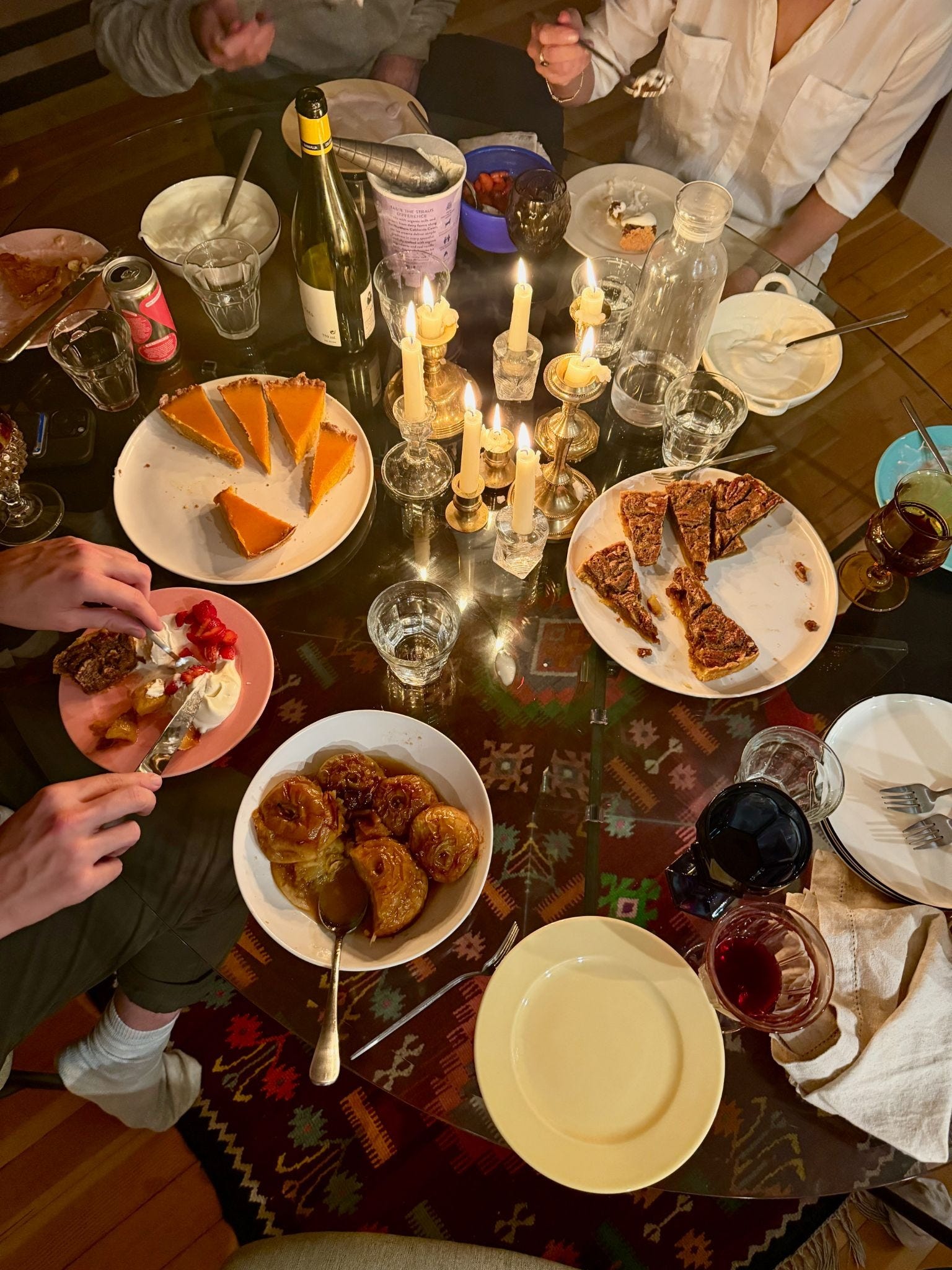
Homemade whipped cream is a banger. Last year, I forced myself to whip by hand like a masochist. It put me in an awful mood for an hour. This year, I used a stand mixer. No one knew the difference. Cut the right corners.
Dear god, clean as you go. Or assign different folks to work the sink and dishwasher for you. Don’t make your guests eye a dirty kitchen while they eat.
And then there’s the thing I always forget while wrapped up in my holiday-infused cooking nonsense.
On Wednesday, I was gearing up for my big prep push. The fridge was in that weird, liminal state where 95% of the food was specifically allocated for the Thanksgiving meal. But I could sense people were milling around the kitchen looking for something to eat.
Over the weekend, I had made a batch of garlic confit to flavor-boost a yogurt sauce for a Friendsgiving. The oil and potatoes included in the confit were still sitting in a container, so I let them reheat in the oven before tossing in a McCall’s compound butter and finishing with Maldon plus a squeeze of lemon. The response was rapturous.
“Why don’t you just do this for the potatoes tomorrow?”
“Wait, how did you make this?”
“Can I have more?”
It was the simplest, quickest and easiest thing I cooked all week. It was also the most beloved. I cook to make the people around me happy. That’s all that matters. Sometimes it’s too easy to let that slip.
I was impressed with the thoroughness of your pre-Thanksgiving prep list and organization. I can relate to a few of your challenges, biggest of which was unfortunately trying to sync the HomePods. RE: your mashed potato - I stole the Jean-Georges Instapot hack for mashed potatoes this year and it was both a massive set it and forget it time saver as well as freeing up a burner on the stovetop (if you have an Instapot that is). Your dinner sounded great.
I’ve never seen/read a Thanksgiving recap and it’s brilliant! Lessons learned and captured are key for success in all areas of life. I’ve learned from your lessons, and I’ll capture mine now. Great article!